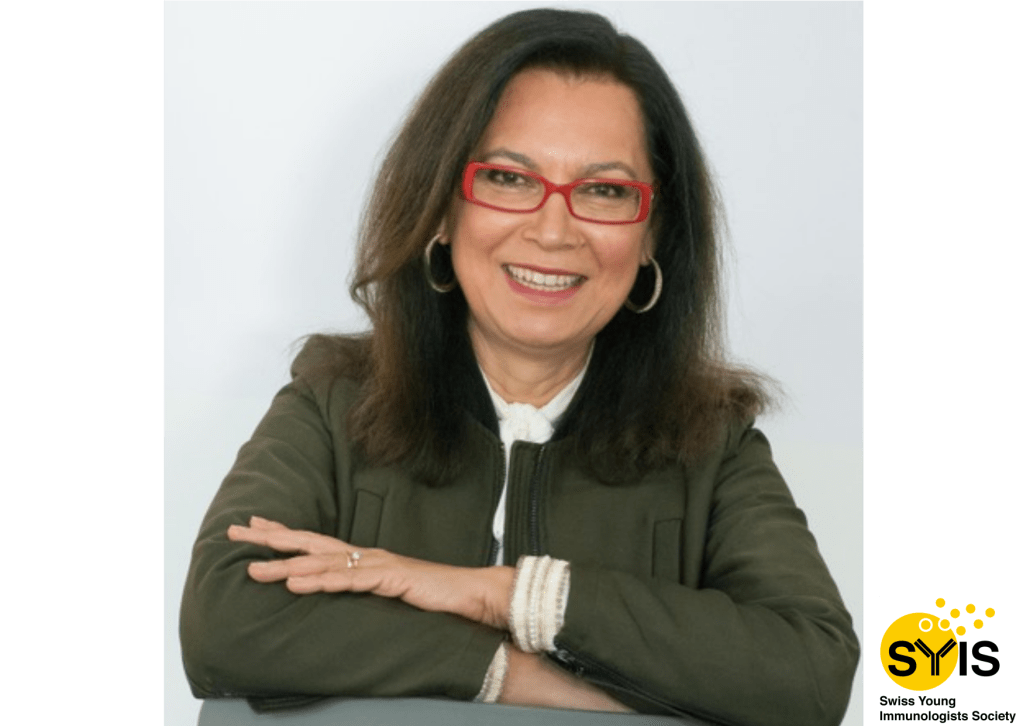
Photo Credit: Mübeccel Akdis
Prof. Mübeccel Akdis is the head of the Immune Regulation research group at the Swiss Institute for Allergy and Asthma research (SIAF) in Davos, Switzerland. Her research focuses on understanding and finding treatments for allergic diseases. More recently, her group has established techniques to investigate allergen-specific effector and regulatory immune cells in allergy and tolerance. She is editorial board member of different journals, among which Allergy.
- Why did you choose to become a scientist?
I am actually a medical doctor and worked as physician for some years until I decided to do PhD on Immunology. I always felt like Carl Sagan said “something incredible was waiting to be discovered somewhere” for me. I wanted to be a scientist since I was spending all my time in the public library of my hometown in middle school years. I started my PhD under the supervision of my first mentor, Kurt Blaser.
- What do you like most about immunology? How did you choose this field of study?
I felt my work in immunology was the opportunity of a lifetime for me to study science to help improve the lives of patients. There is almost no condition that does not involve the immune system in humans and all animals and there is still a lot to discover.
- What kind of prejudices, if any, did you have to face as a woman scientist? What helped you overcome them?
I was born in Turkey as the third daughter of a strong mother with four girls. I was fortunate that my parents supported our university education despite the conservative society. I witnessed the struggles of my eldest sister, at the university and as a teacher in a remote town. I was relatively in safe heavens with the experience that she had brought to our family and the era of rapid modernizations of 1970s.
Actually, I did not have more problems because I am a female scientist.
- What advice would you give to your younger self at the start of your career?
At first I thought that I could have started my PhD much earlier but on the other hand I have had lots of experience about human biology and diseases as physician. I would suggest to get educated in chemistry, biochemistry, bioinformatics, evolutional biology.
- Did you ever doubt your abilities as a scientist? If so, how did you handle these feelings? Is there a decision you regret making in your career?
Because of my medical background and having less knowledge about biology and less experience on the labwork, these were my main challenges in the beginning. I worked harder and longer hours to fill the gap in the lab.
- What do you consider your biggest achievement so far?
My main research area was investigating the mechanisms of allergen tolerance in human allergen-specific T and B cells. I established the Immune Dermatology group in 2003 at SIAF, and I was habilitated in 2005 at the University of Zurich. Using single-cell sequencing technologies, my group continues to investigate the mechanisms of immune tolerance to allergens, and in-depth characterize regulatory and effector B cells. My biggest achievements were the discovery of human Breg cells and contributing to the discovery of human Treg cells and human ILCreg cells, establishing one of the strongest human B cell biology lab in the world, graduating so many PhD students, being part of the WIRM organizers during the last 18 years.
- What was your first impression of Switzerland when you visited it the first time and what do you think about it now?
My first impression about Switzerland was noticing that everything was in order and clean, but not many options and support were offered to the working mothers. I still think the same, there is a need for more support for the mothers with small children to make an academic career.
- If you had to switch careers, what other field (scientific or not) would you see yourself working in and why?
I always wanted to be an archeologist, because I would like to discover the hidden things from the past and also to decode forgotten languages.
- Beside your scientific interests, what are your personal interests?
I love reading books, particularly science fiction. I also enjoy cooking. I have three cats at home and I wish to build a shelter for the abandoned animals.
- What advice would you give to young women who want to pursue the same career as you?
Science is not a job, it is a lifestyle. Scientists can create miracles with effective time management and inventively improve our capabilities to meet our needs. The most important thing is to believe in yourself and continue with your endeavors. Passion and perseverance are the two magic words for success.
 SYIS
SYIS 
Leave a comment