
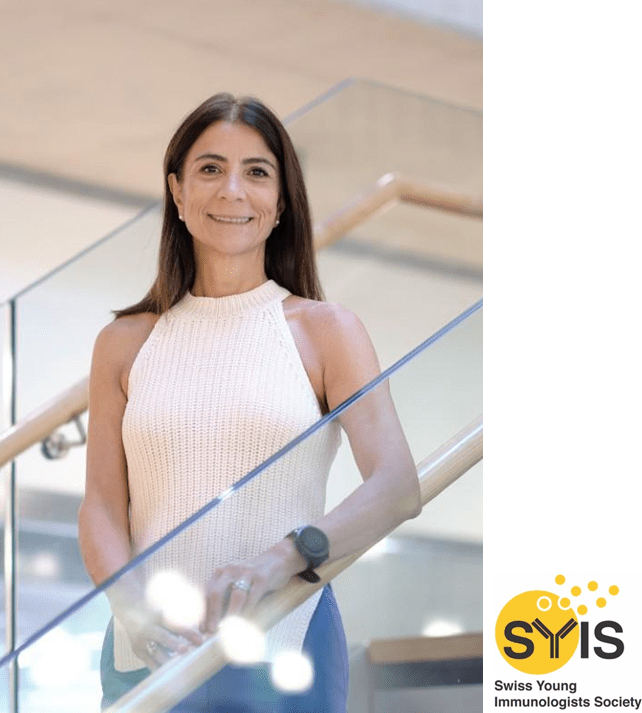
Claudia Mauri is a Professor of Immunology at the Division of Infection and Immunity, Institute of Immunity and Transplantation at UCL.
She earned her PhD in Microbiology from the University of Rome La Sapienza in 1990. Her primary research centers on identifying, analyzing, and genetically characterizing regulatory B cells. She is also deeply interested in exploring the mechanisms behind the breakdown of immune regulation—particularly involving regulatory B and T cells—which may contribute to the development of autoimmune diseases such as rheumatoid arthritis (RA) and systemic lupus erythematosus (SLE).
UCL, Division of Infection and Immunity – Prof. of Immunology – Claudia Mauri
- What led you to choose Immunology and why did you choose to specialize in Breg cells?
I was drawn to immunology because it sits at the crossroads of so many biological systems — it’s incredibly dynamic and has profound clinical relevance. The complexity and elegance of immune regulation particularly fascinated me. I serendipitously identified a population of cells producing IL-10, I was really searching for CD4+T cells producing cytokines in arthritis and became interested in Breg cells because they represent a crucial but often underappreciated element of immune balance. Understanding how regulatory B cells function — and malfunction — offers real potential for therapeutic interventions across autoimmune diseases, cancer, and even infectious diseases.
- Advancements in omics technology produce larger and more thorough datasets. How do you deal with so much data and how do you determine which avenues to pursue based on this data?
It can be overwhelming, but I’ve learned to prioritize by combining biological insight with data-driven approaches. I typically start by grounding the analysis in a clear biological hypothesis or framework, then use omics data to test or expand that. Collaboration with bioinformaticians is another key part of my approach; good data analysis is truly a team effort.
- According to your profile, you are involved in multiple fields of research ranging from Breg cells and auto-immune diseases to intestinal mucosa and gut microbiome. Do you have any recommendations to stay current with the fast-paced research published every day in such diverse fields?
It’s definitely a challenge! I focus on a few key journals and preprint servers, and I also set aside regular time to review new literature rather than doing it reactively. Beyond reading, I find attending focused conferences and participating in interdisciplinary networks helps me stay updated more efficiently. Discussions with colleagues from different but overlapping areas often point me toward important new developments that I might otherwise miss.
- With your extensive publishing experience, do you follow a specific, systematic process for selecting a journal, or do you rely more on intuition?
It’s a balance of both. I first assess the scope and audience of the journal relative to the story we are telling. I also consider where similar impactful work has been published recently. Unfortunately, impact factor remains a major consideration when choosing where to publish, even though it shouldn’t be. After doing this structured assessment, there’s definitely an element of intuition involved, especially in gauging how novel or disruptive the work might seem to a particular editorial board.
- Of course, not everything works out the way you want it to. How do you deal with setbacks in research?
Setbacks are inevitable in research. When they happen, I try to view them as a source of information rather than failure. I reframe the problem: What is this result telling me that I didn’t anticipate? I also encourage open discussion within my team, because often someone else sees an opportunity or alternate interpretation that I didn’t. Persistence, combined with flexibility, is key.
- If not for Immunology, what would you consider to pursue as a professional career?
I would likely have gone into something still centered around problem-solving and discovery, I love architecture. I would have certainly enjoyed building structures, whether intellectual or physical, and finding creative solutions within constraints. But unfortunately, I am really bad at drawing!
 SYIS
SYIS 
Leave a comment